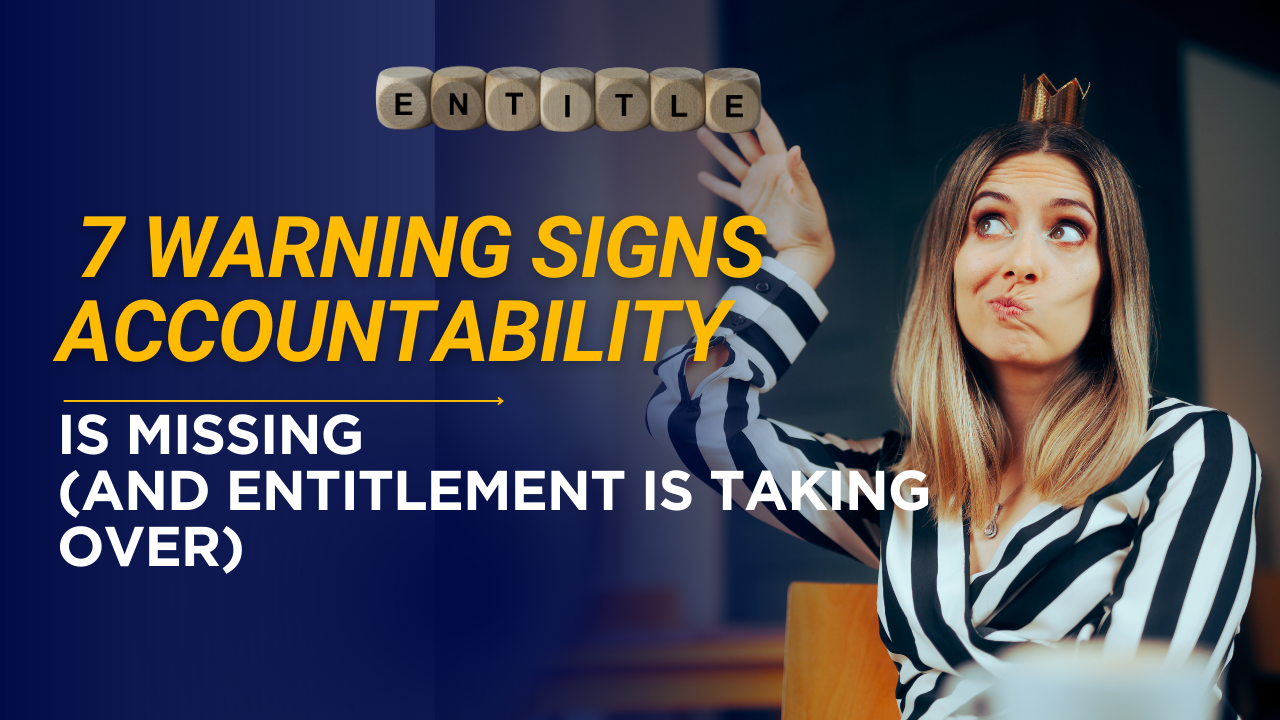
Accountability Actually Means (And Why It Matters)
Accountability is the foundation of personal growth, professional success, and healthy relationships. When it disappears, entitlement quietly takes its place. This shift doesn’t happen overnight. It happens in small moments: when you blame traffic instead of your poor planning, when you expect recognition without results, or when you wait for someone else to solve your problems.
The gap between accountability and entitlement creates real consequences. Teams miss deadlines. Relationships deteriorate. Personal goals remain out of reach. Most people don’t realize they’ve crossed this line until the damage is already done.
This guide breaks down the seven warning signs that accountability is slipping away. More importantly, it shows you the stages from survival to abundance and gives you practical steps to reclaim ownership at each level. Understanding your current situation is crucial for progress, whether you’re in survival mode or striving for abundance.
The Real Definition of Accountability
Accountability means taking full ownership of your actions, decisions, and their outcomes. It’s not about blame or punishment. It’s about recognizing that you have agency in your life, even when circumstances are difficult.
The difference between accountability and blame is critical. Blame looks backward and assigns faults. Accountability looks forward and asks, “What can I do about this?” When you’re accountable, you acknowledge your role without getting stuck in shame or defensiveness.
This distinction matters because accountability drives progress while entitlement creates stagnation. When you own your results, you can improve them. When you deflect responsibility, you give away your power to change anything.
The Cost of Lost Accountability
The absence of accountability shows up everywhere. In your career, it looks like missed promotions, stalled projects, and frustrated colleagues who stop relying on you. In relationships, it appears as recurring conflicts, broken promises, and growing distance between you and the people you care about.
The personal toll is even heavier. Living without accountability means living in a constant state of victimhood. You feel powerless because you’ve convinced yourself that external factors control your life. That mindset is exhausting and prevents you from building the future you actually want.
The 7 Warning Signs Accountability Is Missing
Warning Sign #1: The Blame Game Never Ends
You continually assign blame to circumstances, other individuals, or unfortunate events. Your explanations always involve external factors: the economy, your boss, your partner, your upbringing, or timing. While these factors may be real, focusing exclusively on them strips you of power.
When something goes wrong, you can’t identify your role in the outcome. Even when pressed, you default to “it’s not my fault” or “they should have told me.” This pattern reveals a fundamental unwillingness to examine your contribution.
Warning Sign #2: Excuses Come Before Solutions
Your default response to problems explains why something didn’t work. You spend more energy justifying your actions than problem-solving. When someone asks what went wrong, you have a detailed story ready about why your circumstances were “different” or “special.”
This matters because excuses protect your ego but prevent your growth.
Every minute spent explaining why you couldn’t do something is a minute not spent figuring out how you will do it next time.
Warning Sign #3: Waiting for Someone Else to Act
You expect managers, partners, or friends to resolve your problems. When challenges arise, you wait for someone else to provide the solution, the resources, or the motivation. If external support isn’t immediately available, you become paralyzed.
Your complaints aren’t accompanied by action plans. You’ll talk about what’s wrong for hours, but when asked, “What are you going to do about it?” You either remain silent or refocus the question on what others should do.
Warning Sign #4: Results Don’t Match Rhetoric
You speak passionately about your objectives, yet your actions often fall short. There’s a chronic gap between what you say you’ll do and what actually happens. You set self-imposed deadlines and then quietly let them pass without acknowledgment.
This pattern erodes trust, starting with your trust in yourself. When you repeatedly fail to honor your commitments, you stop believing you’re capable of change. Others stop believing it too.
Warning Sign #5: Entitlement to Recognition Without Work
You expect praise for meeting basic expectations. Showing up on time, completing assigned tasks, or being polite feels like it deserves special acknowledgment. When others receive recognition, you feel resentment instead of curiosity about what they did differently.
This situation reveals a fundamental misunderstanding of how value works. Recognition arises from surpassing expectations or resolving issues, not from merely fulfilling the minimum requirements. Accountability means understanding that distinction and raising your standard accordingly.
Warning Sign #6: Defensive Reactions to Feedback
When someone offers constructive criticism, you immediately justify, explain, or counter-argue. You take improvement suggestions as personal attacks. Even well-intentioned feedback triggers a defensive response that shuts down the conversation.
This defensiveness prevents learning. If you can’t hear what’s not working without shutting down, you can’t fix it. Accountability requires humility to accept that you have blind spots and the maturity to appreciate people who point them out.
Warning Sign #7: Victim Narrative Dominates Your Story
Life happens “to you” rather than “for you” or “because of you.” Your identity is wrapped up in your struggles and hardships. You focus on obstacles rather than opportunities, and your stories center on how circumstances have worked against you.
This narrative becomes self-fulfilling. When you see yourself as a victim, you unconsciously seek evidence to support that belief. You filter out opportunities and filter in problems, reinforcing the story that you’re powerless.
The 4 Stages: From Survival to Abundance
Stage 1: Survival (Crisis Mode)
In survival mode, you’re purely reactive. You’re living paycheck to paycheck, whether that’s financial, emotional, or both. Everything feels urgent, and accountability seems like a luxury you can’t afford when you’re drowning.
Common thoughts include “I’m just trying to get through the day” and “I don’t have time to think about the future.” This stage isn’t about lack of effort. You’re working hard, but the foundation is so shaky that you can’t build anything stable.
Stage 2: Stability (Treading Water)
At stability, your basic needs are met, but growth is stalled. You’re comfortable but unfulfilled. Accountability exists in some areas, usually the ones that feel safest or most familiar, but not in areas that would create real change.
You think, “This is fine for now,” and “I’ll work on my goals when things settle down.” The problem is that things never truly settle down. You’re waiting for permission or perfect conditions that won’t arrive on your own.
Stage 3: Success (Building Momentum)
Success means having clear goals with consistent progress. Accountability becomes a habit instead of a struggle. You see the payoff of your efforts, and results start compounding. You know what works, and you’re doing it regularly.
The internal dialogue shifts to “Progress feels achievable” and “I’m seeing results from my actions.” This stage is where most people want to be, but getting here requires passing through the discomfort of the earlier stages.
Stage 4: Abundance (Thriving)
At abundance, you operate from overflow rather than scarcity. Accountability is automatic, not forced. You create value for others while simultaneously growing yourself. You have options, opportunities, and the resources to invest in long-term goals.
Your thinking becomes expansive: “My actions create predictable positive outcomes,” and “I can focus on what matters most.” This isn’t about wealth alone. It’s about having built systems and habits that support sustained success.
Practical Steps to Progress Through Each Stage
Moving From Survival to Stability
Start by identifying one recurring crisis and creating a prevention plan. If you’re always scrambling to pay rent, that’s the crisis. The crisis arises if you are continuously fighting fires at work. Pick one and solve it systematically.
Consider incorporating a 24-hour buffer into your schedule. This gives you space to think instead of just react. Track how you spend your time for one week. Most people in survival mode don’t realize how much energy they waste on nonessential activities.
For accountability practicesmake one decision each day, regardless of its sizell. Replace “I have to” with “I choose to” in your language. Before reacting to any situation, ask yourself, “What’s in my control right now?”
Moving From Stability to Success
Set one 90-day goal with weekly milestones. Make it specific and measurable. Please arrange for weekly accountability check-ins with yourself, or find a partner who can inquire about your progress. Document what you’re doing visibly, whether that’s a spreadsheet, a journal, or a chart on your wall.
Each week, review what worked and what didn’t. Share your goals with someone who will actually follow up and ask about them. This creates external accountability that supports your internal commitment. Celebrate completed actions, not just outcomes. Progress is built on consistency, which requires acknowledging the small wins.
Moving From Success to Abundance
Build systems that maintain your progress automatically. If you’ve achieved success through discipline, now create structures that make the right choices easier. This might mean automating savings, batching similar tasks, or creating templates for recurring work.
Mentor someone one stage behind you. Teaching forces you to clarify what you know and reinforces your accountability. Invest time in opportunities with 12-month or longer payoffs. At this point, you can afford to take a long-term approach.
Your accountability practices shift to regular reflection on values alignment. You’re not just hitting goals; you’re making sure they’re the right goals. You solve problems proactively before they become urgent. You’ve moved from reactive to strategic.
How to Rebuild Accountability Starting Today
The Three-Question Daily Practice
Every day, ask yourself three questions. First: What did I commit to yesterday, and did I follow through? Be honest. If you don’t follow through, own it without excuse.
Second: What am I committing to today? Be specific. “Work on the project” is vague. “Draft the introduction section for 30 minutes” is accountable.
Third: What got in my way before, and how will I handle it differently? This question prevents repeated mistakes and builds your problem-solving capacity.
Creating External Accountability Structures
Find an accountability partner who will challenge you, not just comfort you. You need someone who will ask hard questions and call you out when you’re making excuses. Use public commitments strategically. Telling people about your goals can motivate you, but only if you choose people who will actually follow up.
Build consequences that matter to you. If you don’t hit your goal, what happens? The consequence doesn’t have to be severe, but it needs to be real enough to influence your behavior.
Shifting Your Internal Narrative
Reframe setbacks as data instead of failures. When something doesn’t work, ask, “What did I learn?” instead of “Why does this always happen to me?” Practice ownership language consistently. Observe when you use passive voice or external blame, and consciously rephrase it.
Build evidence of your reliability for yourself. Keep a log of the promises. This isn’t about perfection; it’s about tracking your progress and proving to yourself that you’re capable of change.
Your Next Step
Accountability isn’t about perfection. It’s about ownership. The seven warning signs in this guide aren’t judgments but mirrors showing you where entitlement might be creeping in. Recognition is the first step toward change.
You don’t have to overhaul your entire life tomorrow. Start where you are. If you’re in survival mode, focus on creating one small buffer. If you’re stable but stuck, commit to one 90-day goal. If you’re already successful, build systems that lead to abundance.
The stages from survival to abundance aren’t linear. You might be thriving in your career but stuck in survival in your relationships. That’s normal. Apply accountability where it matters most right now.
Progress requires you to stop waiting for perfect conditions and start taking imperfect action. The gap between where you are and where you want to be closes one owned decision at a time. Which stage are you at today, and what’s the one action that moves you forward? That’s the only question that matters.