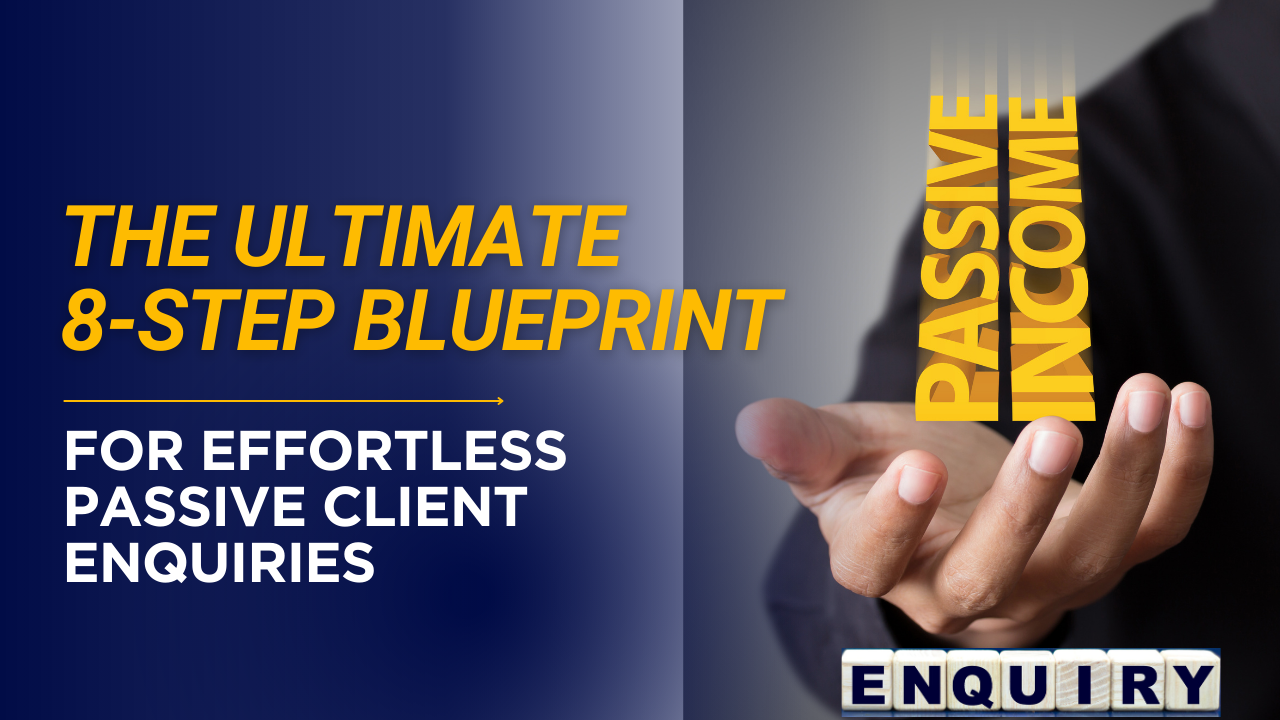
Passive Enquiries 8-Step Blueprint
Passive enquiries are the cornerstone of sustainable client acquisition. Unlike active outreach, which requires constant effort and chasing leads, passive enquiries attract clients who are already interested in your expertise or services. This approach saves time and leads to higher-quality prospects who are more likely to engage seriously and convert.
Clients move through stages of readiness that mirror their level of awareness and commitment: survival, stability, and abundance. In survival, clients may be uncertain and reactive. In stability, they evaluate options and are open to guidance. In abundance, they are confident, goal-oriented, and ready to commit.
Understanding these stages allows advisors to tailor their passive enquiry strategy effectively, ensuring that the clients you attract are engaged at the right level and guided thoughtfully.
This article provides an 8-step blueprint for creating effortless passive enquiries. By following these steps, you can attract high-quality clients, establish authority, and build a system that consistently generates leads without relying solely on outbound marketing or aggressive sales tactics.
Step 1 – Clarify Your Ideal Client Profile
Why Defining Your Target Audience Matters
The first step in generating passive enquiries is to know exactly who your ideal clients are. Without this clarity, your content, messaging, and outreach will lack focus, attracting leads who are unlikely to convert. A well-defined target audience helps you speak directly to their needs, challenges, and goals.
How to Identify Your Ideal Clients
Consider demographics, psychographics, professional or personal goals, and common pain points. Surveys, client interviews, and past engagement data are valuable tools for defining your ideal clients. Knowing their motivations allows you to craft messages that resonate and attract genuine interest, making your passive enquiries more effective.
Step 2 – Optimize Your Online Presence
Website Essentials for Passive Enquiries
A professional, clear, and easy-to-navigate website is crucial. Your website should communicate your expertise, clearly outline services, and include calls to action that invite potential clients to reach out. Simplicity is key: make it easy for clients to submit an enquiry or request more information.
Social Media Optimization
Social media profiles are often the first point of contact for passive enquiries. Ensure your profiles highlight your expertise, showcase client successes, and provide opportunities for engagement. Consistently posting valuable content positions you as a knowledgeable authority, naturally attracting enquiries from those who are ready to engage.
Step 3 – Leverage Educational Content
Creating Value-Driven Content
Content that educates and informs is the backbone of passive enquiries. Blogs, videos, guides, and webinars address client questions, reduce objections, and position you as a trusted advisor.
High-quality content demonstrates expertise while offering real value, encouraging prospects to reach out without prompting.
Positioning Yourself as an Authority
Authority is built through consistent, helpful, and relevant content. Sharing insights without overt selling builds trust. When potential clients see that you understand their challenges and can offer solutions, they are more likely to initiate contact, generating passive enquiries.
Step 4 – Implement Automated Lead Capture
Forms, Landing Pages, and Tools
To capture passive enquiries efficiently, create clear, simple forms and landing pages. Tools such as automated forms, pop-ups, or dedicated landing pages allow potential clients to submit enquiries quickly and effortlessly. Ensure the process is user-friendly and does not create friction.
How Automation Supports Passive Enquiries
Automation ensures immediate responses to enquiries, nurturing leads while reducing manual follow-up. Email triggers, auto-responses, and lead scoring systems allow you to engage efficiently and maintain a professional, timely presence with potential clients.
Step 5 – Build an Engaging Email Nurture Sequence
Crafting Emails That Add Value
Email sequences keep passive enquiries engaged. Send educational, informative, and relationship-focused messages that address client needs and provide solutions. Avoid overly promotional content; instead, aim to inform and guide prospects in a way that demonstrates your expertise.
Timing and Frequency Strategies
Consistency is critical. Send emails at regular intervals to stay top of mind without overwhelming recipients. A predictable, value-focused sequence builds trust and encourages passive enquiries to progress to active engagement.
Step 6 – Encourage Referrals and Testimonials
Social Proof That Generates Passive Enquiries
Case studies, client testimonials, and success stories provide social proof. They reassure prospects of your expertise and reliability, prompting passive enquiries from those seeking similar results. Authentic stories resonate more than generic promotional messages.
Referral Programs and Incentives
Referral programs incentivize existing clients to recommend your services. Encourage satisfied clients to refer friends or colleagues by offering meaningful rewards or recognition. Referrals often result in higher-quality passive enquiries because they come with built-in trust.
Step 7 – Track, Analyze, and Optimize
Key Metrics to Monitor Passive Enquiries
To maximize the effectiveness of your passive enquiry strategy, track metrics such as the number of enquiries, sources, conversion rates, and client stage. Understanding these data points helps identify which strategies are working and where improvements are needed.
Continuous Improvement Strategies
Regularly analyze results to refine messaging, content, and systems. Adjust campaigns based on performance insights, experiment with new approaches, and optimize automated workflows. Continuous refinement ensures your passive enquiry system remains effective and scalable.
Step 8 – Maintain Consistency and Visibility
Staying Top of Mind
Consistency builds recognition. Regular content creation, engagement on social media, and visible authority in your niche ensure that your brand remains top of mind for potential clients. Consistent visibility increases the likelihood of passive enquiries over time.
Aligning Marketing with Client Journey Stages
Tailor your approach based on client readiness stages. For survival-stage clients, provide reassurance and basic information. For stability-stage clients,they offer deeper insights and comparative options. For abundance-stage clients, highlight advanced solutions and next steps. Aligning content with the client journey encourages passive enquiries that are more likely to convert.
Common Challenges and How to Overcome Them
Low Initial Enquiries
If passive enquiries are low, revisit your messaging and content. Ensure that your value proposition is clear and resonates with your ideal clients. Reassess your target audience profile to confirm alignment with your content and outreach strategies.
Lack of Follow-Up
Passive enquiries can stall without timely follow-up. Implement automation to respond promptly and add personal touches where possible. Even simple follow-ups can significantly increase engagement and conversion.
Maintaining Quality Leads
Not all enquiries are equal. Filter leads based on interest and readiness to ensure resources are focused on high-quality prospects. Refine your content and lead capture process to attract the most suitable clients for your services.
Final Thoughts
Passive enquiries are a powerful tool for advisors, consultants, and business owners seeking sustainable client acquisition. By following this 8-step blueprint, you can create a system that consistently generates high-quality leads without constant outreach or aggressive marketing.
From clarifying your ideal client profile to maintaining consistent visibility, each step in this blueprint contributes to a self-sustaining flow of passive enquiries.
Implementing automated tools, educational content, social proof, and tailored follow-up ensures that clients are nurtured through survival, stability, and abundance stages of engagement.
By investing in a structured approach to passive enquiries, you not only save time and effort but also build stronger relationships, enhance credibility, and create a predictable system for long-term success. The mastery of these strategies transforms client acquisition from reactive to proactive, allowing your practice to grow effortlessly over time.