The Mental Shift That Separates Winners from Quitters
The client says no after three months of back and forth. Your best employee just quit. The project you poured your heart into completely flopped. In that moment, your body floods with cortisol. Your jaw tightens. Your mind races toward worst-case scenarios or immediate defensive reactions.
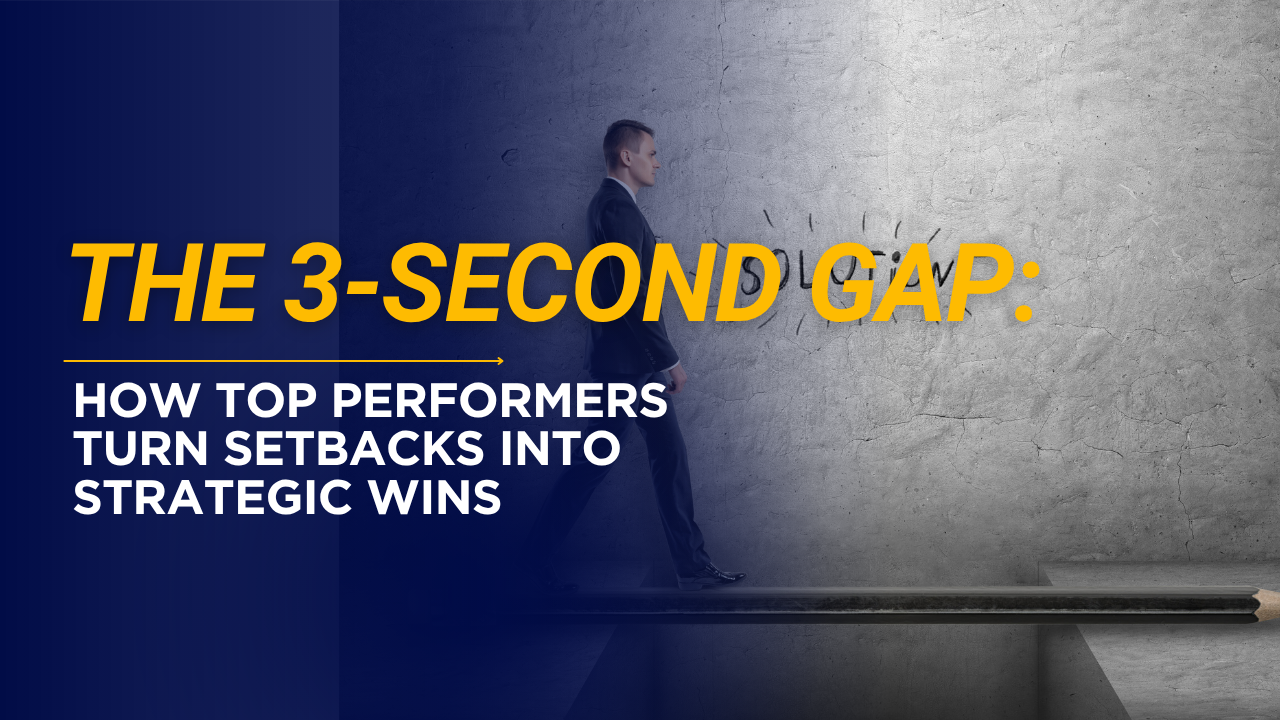
Here’s what separates top performers from everyone else: they’ve mastered the three-second gap between what happens and how they respond. That tiny pause is where reactive panic transforms into strategic action. It’s where setbacks become data instead of disasters.
This article breaks down the 3-second rule strategy across five stages of performance, from survival to abundance. You’ll learn what the gap looks like at each level and get practical techniques to implement this skill right now, regardless of where you’re starting.
What Is the 3-Second Rule Strategy (And Why It Matters)
The 3-second rule strategy is deceptively simple: when something goes wrong, pause for three seconds before you respond. That’s it. Three seconds between stimulus and response. Between trigger and reaction. Between setback and strategy.
Here’s the neuroscience: when something threatens you (or feels like it does), your amygdala triggers the fight-or-flight response. Blood rushes away from your prefrontal cortex, the part of your brain responsible for rational thinking, planning, and strategic decision-making. You literally get dumber under stress. The three-second pause interrupts this hijack and gives your prefrontal cortex time to come back online.
Top performers across every field have mastered this skill. Elite athletes pause before responding to bad calls. Successful negotiators pause before reacting to low offers. High-performing leaders pause before responding to crises. The pause isn’t weakness. It’s where power lives.
The cost of reactive responses compounds over time. You send the angry email. You make the defensive comment in the meeting. You quit when you should have pivoted. You double down when you should have adjusted. Each reactive decision creates consequences you then have to manage. Three seconds prevents most of those consequences from ever happening.
Stage 1: Using the 3-Second Rule in Survival Mode (When Everything Feels Urgent)
What Setbacks Look Like in Survival Stage
In survival mode, every setback feels existential. A lost client doesn’t just mean lost revenue. It means you might not make rent. A rejection doesn’t sting. It threatens your entire operation. Every no feels personal because the business and your identity are completely fused.
Your stress response is constantly triggered. You’re living in fight-or-flight mode as a baseline. Sleep is terrible. Anxiety is your constant companion. When the next setback hits, you’re already maxed out emotionally. There’s no buffer.
Why the 3-Second Rule Is Hardest Here (But Most Critical)
The 3-second rule is hardest to implement in survival stage because your nervous system is primed for panic. Your brain believes (correctly, from its perspective) that immediate action is required for survival. Pausing feels dangerous. Your survival brain screams that three seconds of inaction could be catastrophic.
But here’s the paradox: reactive decisions in survival mode compound your problems. You agree to terrible contract terms because you’re desperate. You keep toxic clients because you can’t afford to lose anyone. You snap at people who could help you because you’re overwhelmed. The very thing your brain thinks will save you (immediate reaction) actually makes survival harder.
How to Apply the 3-Second Rule Strategy at This Level
Start with physical interrupt techniques. When you feel the panic rising, do something physical to break the stress response. Take one deep breath. Count to three out loud. Touch something cold. Splash water on your face. The physical action interrupts the hijack.
Use the “fact vs. story” micro-assessment. In three seconds, separate what actually happened (fact) from what you’re afraid it means (story). Fact: client said no. Story: I’m going to fail and lose everything. The story triggers panic. The fact requires strategy.
Ask yourself one question: “Will panic help right now?” The answer is always no, but asking the question engages your prefrontal cortex. It shifts you from reactive to reflective, even slightly.
Create a pre-decided emergency response plan. You can’t think strategically in the moment if you haven’t thought strategically before the moment. Decide in advance: when X happens, I will do Y. Not because Y is always perfect, but because pre-decided responses are always better than panic responses.
The practical win at this stage isn’t perfect responses. It’s surviving the moment without making things worse. That’s a massive upgrade from reactive survival.
Progression Step to Stability
Track your reaction patterns for one week. Write down every setback and how you responded. You’ll notice patterns. Same triggers. Same reactions. Awareness is the first step to change.
Identify your three most common triggers. Is it client rejection? Cash flow stress? Criticism? Know your buttons so you can prepare for them.
Pre-script responses to predictable setbacks. If X happens (and it will), I will pause and say/do Y. Scripts remove decision fatigue when you’re already overwhelmed.
Stage 2: Using the 3-Second Rule in Stability (Building Consistent Response Patterns)
What Setbacks Look Like in Stability Stage
Stability stage setbacks are less existential. A team member underperforms and it’s frustrating, not fatal. Revenue dips and you’re concerned, not panicking about homelessness. Client feedback stings your ego but doesn’t threaten your survival. Competitors make moves that concern you but don’t destroy you overnight.
The emotional intensity decreases, but that creates a new trap. When setbacks aren’t life-threatening, it’s tempting to skip the strategic pause because it doesn’t feel urgent. This is how bad habits form.
How Your Relationship with Setbacks Shifts
You have room to think beyond immediate survival. You can afford to pause without catastrophe. You start noticing patterns because this isn’t the first time something similar has happened. That pattern recognition is valuable data if you use the three-second gap to access it.
Advanced 3-Second Rule Strategy Applications
Use the “reframe” technique during your pause. Every setback contains useful information. In three seconds, ask: what is this trying to teach me? Client feedback feels harsh, but what’s the kernel of truth I need to hear? This isn’t toxic positivity. It’s strategic data extraction.
Practice emotion labeling. Name what you’re feeling in the three-second gap. “I’m feeling defensive.” “I’m feeling embarrassed.” “I’m feeling angry.” Neuroscience research shows that labeling emotions reduces their intensity. You’re literally calming your nervous system by naming what’s happening.
Apply the “advisor” perspective. In three seconds, ask what you’d tell someone else in this situation. We’re terrible at solving our own problems in the moment but excellent at solving other people’s identical problems. The pause lets you access your own wisdom.
Document your response afterward. Keep a simple log. What happened, how you paused, what you chose, what resulted. Over time, you’ll see your response quality improve. That feedback loop accelerates growth.
Progression Step to Success
Build a decision-making framework for common setbacks. If team member misses deadline, here’s the response framework. If client complains, here’s the process. Frameworks turn the three-second pause into strategic protocol.
Create a “setback response scorecard.” Rate your responses on a simple scale. How strategic was my response? How would I rate my emotional regulation? This makes improvement measurable.
Mentor someone else through a setback using the 3-second framework. Teaching solidifies learning. When you help someone else pause and choose their response, you reinforce your own skill.
Stage 3: Using the 3-Second Rule for Success (Turning Setbacks Into Opportunities)
What Setbacks Look Like in Success Stage
Success stage setbacks are higher stakes. Strategic initiatives fail after significant investment. Key people leave and take institutional knowledge with them. Market conditions shift and threaten your business model. You’re taking bigger risks, which means bigger potential losses when things don’t work.
But you have resources now. Financial buffers. Strong teams. Established systems. The setbacks are bigger, but so is your capacity to handle them.
The Strategic Advantage of the 3-Second Gap
The pause gives you space to see second and third-order consequences. When a key employee quits, the first-order consequence is you lost talent. The second-order consequence might be that your succession planning is weak. The third-order consequence might be that your culture isn’t retaining top performers. You can’t see past first-order in reactive mode.
The gap allows you to extract lessons in real-time. Instead of moving immediately to damage control, you can ask better questions. What does this setback reveal about my strategy? What assumption just got proven wrong? What did I miss?
Your emotional regulation in the gap signals competence to your team. When the leader panics, everyone panics. When the leader pauses, stays calm, and responds strategically, the team trusts the process. Your three-second pause gives them permission to pause too.
Elite 3-Second Rule Strategy Techniques
Run an “opportunity audit” during the pause. When one door closes, which door just opened? This isn’t platitude. It’s strategy. Project failed? Now you have budget and team capacity freed up for something better. Client left? Now you can pursue the client you actually wanted.
Reverse engineer the setback. What does this reveal about your strategy, assumptions, or blind spots? Treat every setback as a diagnostic tool. The business just gave you expensive feedback for free.
Apply the “public response” test. If everyone could see how I’m about to respond, would I be proud of it? This question instantly elevates your response quality. You’ll never send the petty email after asking this.
Run a quick stakeholder impact assessment. Who else is affected by this setback and my response? Your reaction ripples beyond you. Three seconds lets you consider the full impact.
Progression Step to Significance
Use setbacks to stress-test your systems. When something breaks, does your system catch it or does everything fall apart? Build systems that handle setbacks without you.
Teach your team the 3-second rule framework explicitly. Make the pause part of your culture. Normalize strategic responses over reactive ones.
Create case studies from your own setback responses. What happened, how you paused, what you chose, what resulted. These stories become training material.
Stage 4: Using the 3-Second Rule for Significance (Modeling Response for Others)
What Setbacks Look Like in Significance Stage
Significance stage setbacks have wider visibility. Legacy projects don’t land as expected and many people are watching. Public failures affect your reputation at scale. Organizational crises impact not just you but everyone who depends on you. Misunderstandings happen in public forums.
The stakes aren’t personal survival anymore. They’re about impact, legacy, and influence. Different pressure, but pressure nonetheless.
Why Your Response Matters Beyond You
Your reaction sets the tone for your entire organization. When the leader responds strategically to bad news, the team learns that setbacks are solvable. When the leader panics, the team learns that problems are catastrophic. You’re teaching through modeling whether you intend to or not.
People are watching how you handle adversity. Your three-second pause gives others permission to pause too. You’re not just managing your own response. You’re shaping organizational culture through your reaction patterns.
The 3-Second Rule Strategy as Leadership Tool
Use the “culture creator” lens during your pause. What behavior am I normalizing with this response? If everyone responded to setbacks the way I’m about to, what kind of organization would this be? Your response becomes policy through repetition.
Practice transparent processing. Show your thinking out loud during the three-second gap. “Here’s what happened.
Here’s what I’m feeling. Here’s what I’m considering. Here’s what I’m choosing and why.” This teaches others the internal process of strategic response.
Apply the “teaching moment” frame. How can we all learn from this? The question shifts setbacks from failures to curriculum. Your organization gets smarter with every setback instead of just more traumatized.
Delegate response when appropriate. Not everything needs your reaction. Sometimes the most strategic use of the three-second gap is deciding you’re not the right person to respond at all.
Progression Step to Abundance
Document your decision-making process during setbacks. Create frameworks others can use without you. The goal is to make your wisdom scalable.
Build a culture where strategic pauses are normalized, not just tolerated. Celebrate people who pause before reacting. Make it a competency you hire and promote for.
Stage 5: Using the 3-Second Rule in Abundance (Freedom to Choose Your Battles)
What Setbacks Look Like in Abundance Stage
Abundance stage setbacks are often relationship-based or legacy-focused. Strategic misalignments with partners. Concerns about long-term impact. Disappointments in outcomes that don’t affect your security but do affect your vision. You have the luxury of choosing which setbacks deserve your energy.
The 3-Second Rule Becomes Intuitive
At this stage, the pause is your default setting, not something you force yourself to do. You’ve rewired your nervous system through thousands of repetitions. Setbacks trigger curiosity before they trigger emotion. You can hold paradox comfortably. You’re disappointed and optimistic simultaneously. Frustrated and grateful. The three-second gap expanded into your entire operating system.
Mastery-Level Applications
The “non-response” becomes a strategic choice. Sometimes the most powerful use of the three-second gap is deciding that no response is the right response. Not everything deserves your energy, attention, or reaction. Abundance means you get to choose.
Use the gap to consider 10-year implications. What will matter about this setback in a decade? The long view transforms most setbacks into footnotes. Three seconds gives you access to that perspective.
Practice the “gratitude pivot.” What’s the hidden gift in this setback? This isn’t bypassing disappointment. It’s extracting value alongside the sting. Both can be true.
Share your process publicly to help others develop this skill. Your mastery becomes most valuable when you give it away.
Maintaining the Edge at This Level
Continue practicing on small setbacks. Skills atrophy without use. Don’t wait for major crises to engage the three-second rule. Practice on minor annoyances.
Stay connected to people in earlier stages. Helping someone in survival mode pause before reacting keeps you humble and keeps your skills sharp.
Use your abundance to create safety for others to practice the pause. When people aren’t fighting for survival, they can develop strategic response skills faster.
Common Mistakes That Sabotage the 3-Second Rule Strategy
Mistake #1: Confusing the Pause with Inaction
The gap exists for better action, not avoiding action. Strategic response is still response. Sometimes the strategic choice after three seconds is immediate action. The pause doesn’t mean you become passive. It means you become intentional.
Know when speed actually matters versus when it just feels urgent. True emergencies are rare. Most things that feel urgent can handle three seconds of thought.
Mistake #2: Using the Pause to Suppress Emotion
The goal is regulation, not suppression. Emotions contain information you need. Fear tells you something matters. Anger tells you a boundary was crossed. Disappointment tells you where you were invested. Feel it, name it, and then choose your response. The three-second gap creates space for all of that.
Mistake #3: Expecting Perfection Immediately
This is a skill, not a switch. You won’t master it after reading one article. You’ll blow it sometimes. You’ll react instead of respond. That’s data too. Notice it. Learn from it. Try again. Progress over perfection is the mindset that makes this work.
Implementing the 3-Second Rule Strategy Starting Today
Identify your current stage honestly. Where you want to be doesn’t matter. Where you actually are determines your starting point. No shame in any stage. Only growth opportunity.
Choose your first trigger to practice on. Don’t start with your biggest, most emotionally charged setback. Start with something low-stakes that happens regularly. Mild criticism. Small disappointments. Minor inconveniences. Build the skill on easy mode first.
Track your progress simply. Keep a log: what triggered me, did I pause, how did I respond, what happened. You’ll see improvement in response quality faster than you expect. Celebrate the pause itself, not just perfect outcomes.
Three Seconds to Transform Setbacks Into Wins
The 3-second gap is where top performers live. It’s the space between what happens to you and who you become because of it. Your current stage determines how you apply this strategy, but the principle stays constant: pause, choose, respond.
One setback. One pause. One better response. String enough of those together and you’ve transformed not just how you handle adversity but who you are under pressure. That’s the compound effect of three seconds.
The next setback is coming. It always is. When it arrives, remember: the gap between stimulus and response is where your power lives. Use it.
Turn Your Setbacks Into Your Competitive Edge
The financial advisory industry rewards those who can handle rejection, learn from setbacks, and keep moving forward. But you don’t have to navigate it alone.
We’ve built systems that reduce your failure rate by giving you proven frameworks, qualified appointments, and ongoing coaching. But even with the best systems, you’ll face setbacks every successful advisor does.
The difference? You’ll have the support, mentorship, and community to help you extract maximum learning from every setback and turn it into fuel for your next breakthrough.
The question isn’t whether you’ll face obstacles. The question is whether you’ll use them as stepping stones or stumbling blocks.