Why Fast Execution Beats Perfect Planning Every Time
Why Fast Execution Beats Perfect Planning Every Time
Planning feels safe. It feels productive. You map out every detail, anticipate every obstacle, and craft the perfect roadmap to success. Hours turn into days as you refine your strategy, waiting for that ideal moment when everything aligns perfectly.
But here’s what actually happens: while you’re planning, someone else is doing.
We’ve all experienced that sinking feeling when you finally feel “ready” to launch, only to discover a competitor already owns the space you were so carefully preparing to enter. Your detailed plan, no matter how brilliant, couldn’t compete with their imperfect action.
The uncomfortable truth? In today’s hyper-competitive landscape, perfect planning is not just overrated, it’s a liability. Speed has emerged as the defining advantage. Those who execute quickly don’t simply beat others to market; they generate real-world insights, adapt in real-time, and build momentum that no amount of planning can replicate.
This article reveals why rapid execution consistently outperforms meticulous planning, what this principle looks like at different stages of business growth, and how to build an execution system that maintains speed without sacrificing strategic thinking.
The Myth of Perfect Planning
Why “Perfect Planning” Sounds Smart But Fails in Practice
On paper, perfect planning feels responsible. It promises control, precision, and predictability. But in real life, the world moves too fast for perfection. Markets shift, customer preferences change, and unexpected challenges appear overnight.
Overplanning gives a false sense of security. It keeps you thinking instead of doing. The result? You never test your ideas in the real world, and by the time you do, conditions have already changed.
True strategy isn’t about predicting the future perfectly, it’s about adapting to it faster than anyone else.
The Real Cost of Overplanning
The cost of overplanning isn’t just time. It’s lost opportunity.
Every week spent perfecting a plan is a week a competitor gains ground. Every revision delays momentum.
Meanwhile, the energy that could have been spent building and learning is drained by hesitation.
In startups and established organizations alike, the winners are those who learn faster, not those who plan more. Tech companies like Amazon or Tesla thrive because they launch fast, gather feedback, and iterate constantly. They value motion over perfection.
Why Speed Is the New Strategy
Execution Creates Real-Time Feedback
Planning is theoretical. Execution is practical. When you act fast, you get immediate data from real results. You stop guessing and start knowing.
For example, instead of spending months designing the “perfect” marketing campaign, a smart team launches a small version in two weeks. They collect real metrics, see what resonates, and adjust instantly. The feedback loop is short, and the learning is valuable.
Speed gives you truth. Planning only gives you assumptions.
Speed Builds Momentum and Confidence
Momentum is a powerful force. Once you start executing, every small win fuels the next. You move from hesitation to motivation. Teams that act fast experience visible progress, which builds confidence and collaboration.
This creates a self-reinforcing loop: quick action leads to quick results, which inspires more action. Meanwhile, teams stuck in planning meetings lose energy before they ever begin.
Momentum is energy in motion and energy compounds.
Fast Execution Outpaces the Competition
Speed isn’t about rushing. It’s about reducing friction.
While others wait for more data or approval, fast executors are already testing, learning, and adjusting. They don’t aim to be perfect, they aim to be present in the market.
In modern business, adaptability beats accuracy. The ability to adjust faster than others is the true competitive advantage.
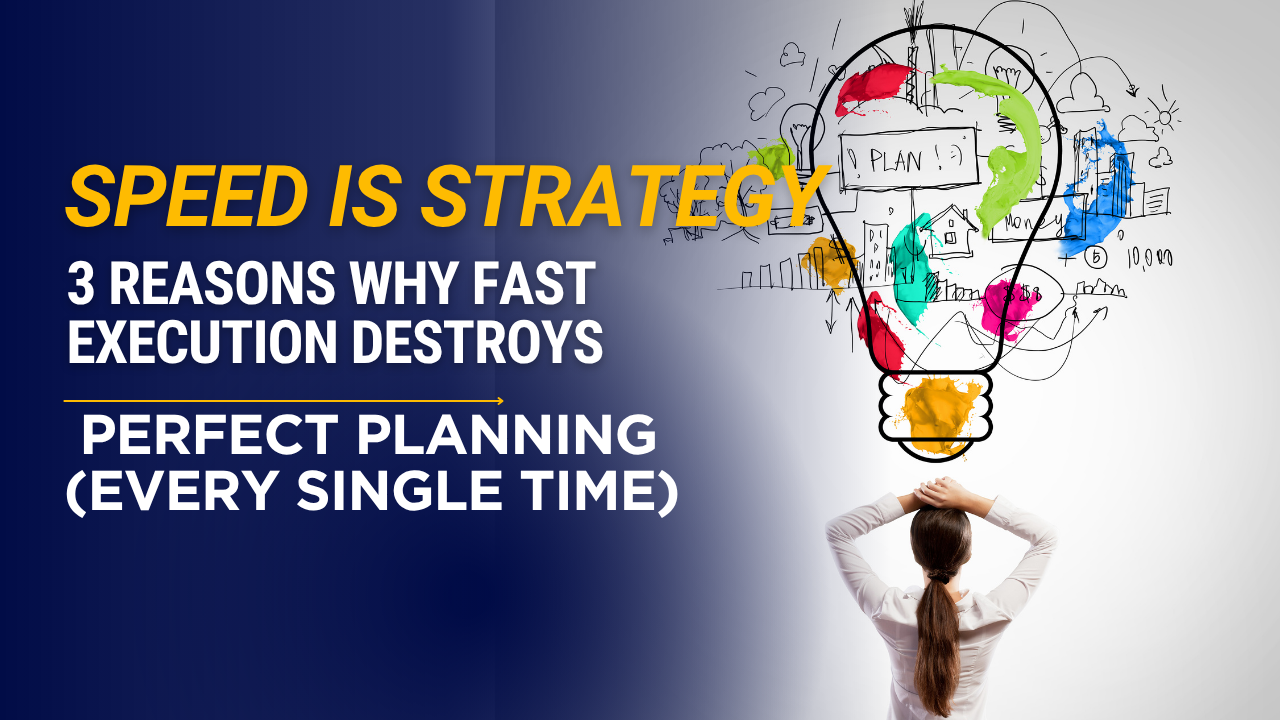
The Three Reasons Fast Execution Destroys Perfect Planning
Reason #1: Clarity Comes from Action, Not Theory
You can’t think your way into perfect clarity. Clarity comes from movement.
Plans are hypotheses. Until you take action, they’re just educated guesses. Every real-world step provides new information that shapes your next move.
A simple example: imagine a creator delaying content for months because they’re unsure what their audience wants. If they just posted one video, they’d get instant feedback and clarity for the next one. Action reveals the path.
Stop waiting for clarity before you act act to create clarity.
Reason #2: Adaptability Beats Accuracy
In unpredictable environments, rigid plans become liabilities. The faster you move, the sooner you can adjust.
Adaptable teams don’t waste time defending old plans. They use short cycles of action, review, and improvement.
This mindset mirrors agile development, where small, fast iterations outperform massive, perfect launches.
It’s not about doing everything fast. It’s about learning fast and adapting effectively. Flexibility wins over flawless prediction.
Reason #3: Momentum Multiplies Results
Momentum turns effort into exponential progress.
Think of momentum as the compounding interest of execution. Each completed task, each quick launch, and each small success builds confidence and accelerates future wins.
Perfectionism, on the other hand, breaks momentum. When you wait for everything to align, you lose speed and motivation. Momentum rewards consistency, not perfection.
From Survival to Abundance: The Speed Maturity Model
Understanding the stages of progress helps you identify where you stand and what needs to change. Here’s how individuals and organizations evolve from struggling to thriving through the power of speed.
Stage 1 – Survival: Trapped in Planning Mode
You’re overthinking everything. Fear of failure leads to endless preparation. You keep refining your strategy, hoping to avoid mistakes.
The result? Stagnation. Nothing moves forward.
Practical step: Set a 48-hour deadline for any idea you’ve been delaying. Commit to action, even if it’s imperfect. The goal is to start, not to perfect.
Stage 2 – Stability: Balancing Planning and Action
Here, planning still matters, but it’s paired with small experiments. You test ideas on a small scale before expanding.
You’re learning to trust feedback more than forecasts. Each test builds confidence.
Practical step: Create short feedback loops after every project or campaign. Ask: What worked? What didn’t? What do we try next?
Stage 3 – Success: Speed as the Default Strategy
Now, action leads your process. You’ve built systems that support rapid execution and decision-making. You no longer fear imperfection because you know improvement follows iteration.
Practical step: Use a “launch, learn, adjust” framework. Every project moves through that cycle quickly, ensuring progress never stalls.
Stage 4 – Abundance: Systemized Speed
At this stage, speed is built into the organization’s DNA. Systems, processes, and automation allow fast movement without chaos.
You make quick decisions because structure supports you. It’s not about rushing, it’s about removing friction.
Practical step: Automate repetitive tasks and delegate decision authority. Trust your systems and your team to keep things moving.
Practical Steps to Build a Fast-Execution Culture
Step 1 – Create a Bias Toward Action
Build a culture where people act on informed instincts rather than waiting for perfect data. Encourage quick decisions followed by immediate feedback.
A “decide and do” mindset transforms slow organizations into responsive ones.
Step 2 – Build Short Feedback Loops
Speed without learning is chaos. Establish short review cycles daily stand-ups, weekly retrospectives, or fast debriefs after launches.
The goal is to learn while moving, not pause to analyze endlessly.
Step 3 – Reward Speed and Learning, Not Perfection
People repeat what’s rewarded. If your organization praises flawless planning but ignores quick learning, progress slows.
Reward initiative. Celebrate lessons learned from action, even when the results weren’t ideal. Speed grows where experimentation is safe.
Step 4 – Simplify Decision-Making Systems
The biggest enemy of speed is bureaucracy. Simplify how decisions are made. Clarify which actions require approval and which can proceed independently.
Empower teams to move without waiting for constant permission.
Common Fears About Fast Execution (and How to Overcome Them)
“What if I make the wrong decision?”
You will. Everyone does. The difference is, fast movers recover faster. Each mistake provides data for smarter next steps. Reframe failure as feedback; it’s part of the process.
“Won’t speed cause chaos?”
Speed without clarity can lead to chaos. But when paired with structure, clear priorities, checklists, and communication speed create rhythm, not disorder.
“How do I maintain quality while moving fast?”
Quality comes from systems, not slowness. Use templates, automation, and SOPs to ensure consistency even at high speed. The faster you execute, the more chances you have to refine quality over time.
Turning Speed Into Sustainable Strategy
Balance Between Urgency and Intention
Fast execution doesn’t mean reckless action. It means urgency with focus. Always know why you’re moving fast not just how.
Build Systems That Support Velocity
Speed thrives in structured environments. Automate repetitive processes. Use tools that simplify collaboration and communication. The goal is to remove friction, not add more hustle.
Review and Refine Regularly
Schedule regular checkpoints to step back and assess progress. Fast doesn’t mean forever forward without reflection. Sustainable speed depends on conscious improvement.
Final Thoughts: Speed Is the Strategy That Wins
Perfect planning may feel safe, but it’s speed that builds success.
Fast execution creates clarity, adaptability, and unstoppable momentum. It allows you to move from survival to abundance, from waiting to winning.
The world doesn’t reward those who plan best. It rewards those who learn fastest.
So, here’s the question that matters most:
What small action can you take today that moves you forward, even if it isn’t perfect?
Don’t wait for the perfect plan. Start now, learn fast, and let speed become your strategy.